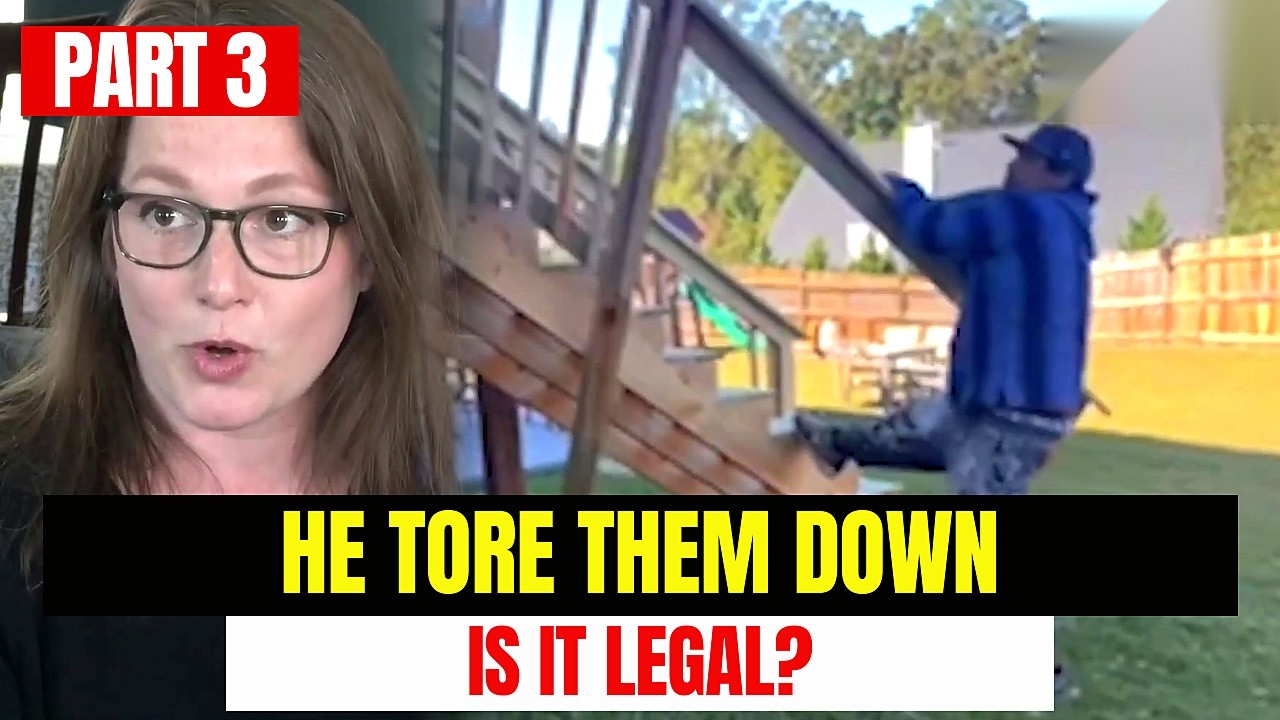




This is Part 3 of our series on contractors who took the work back after a payment dispute. In Part 1 and Part 2, we looked at chainsaws, Bobcats, jackhammers, and a Melbourne roofer who pulled his own tiles. Those first 2 videos have about 583,000 and 484,000 views: Part 1 on YouTube and Part 2 on YouTube.
This follow-up covers 5 more cases, including one that ended with a guilty plea and a 4-year prison sentence.
Some of these disputes were still in court when the video was published. Taking work back can have serious legal consequences. This is not legal advice.
Sponsored by Directorii. Homeowners, Directorii offers up to $30,000 in deposit protection. Contractors, Directorii can guarantee payment on eligible registered projects. Start at Directorii.com.
Watch the full video here:
Chapters:
- 00:00 Five more contractors who took their work back
- 00:27 A builder sledgehammers a porch after 2 checks bounce (England)
- 02:14 A plumber leaves a balloon in a grease trap until the bill is paid (Indiana)
- 04:07 A dumpster company returns a full load to the driveway (California)
- 06:00 Sponsor: Directorii
- 08:17 A digger driver wrecks 5 new homes, pleads guilty to criminal damage and gets 4 years (England)
- 10:15 So who was right?
A builder sledgehammers a porch after 2 checks bounce (England)
In April 2008, in Shoreham, West Sussex, builder Nigel Gray said he had built a porch and conservatory for an agreed fee of £15,000. The customer, Anita Dovey, was a council tenant who had permission to improve the house. Gray said 2 of her checks bounced, one for £9,600 and one for £5,000, and that he had been given a string of excuses and missed deadlines.
Gray and his workers came back with sledgehammers. They demolished the porch and took the conservatory down piece by piece. Gray told the BBC he was "absolutely gutted" because it was "fantastic handiwork," but he "could not just let this go." He estimated the job, legal fees, bank charges, and lost work had cost him about £22,000.
Gray said he had the consent of Adur District Council, which owned the property, before the demolition. A council spokesman told the BBC that tenants are allowed to make improvements, that this private agreement had gone wrong, and that Dovey would be billed for putting the property back to its original state. Dovey declined to comment.
A sledgehammer can take the work back. It does not collect the bill, and it leaves a damaged home.
A plumber leaves a balloon in a grease trap (Indiana)
In Evansville, Indiana, in March 2025, Thai Bistro & Bar called Heavrin Plumbing to clear a clogged grease trap. The first bill was $235. The clog came back 3 days later, and the restaurant called again as an emergency. The second bill was $390, because the plumber came back on overtime.
Operations manager Jesse Sanders said the restaurant was not refusing to pay. It wanted clarity on why it was charged twice for the same issue, and whether the return visit was needed because the first job had not held. Heavrin Plumbing owner Joel Heavrin told WFIE the company does not offer warranties on drain cleaning. He said they can snake a line and make sure it is open, which is what they did.
The next morning, according to Sanders, the plumber came back, put a balloon in the grease trap, and said he would not remove it until the second bill was paid. Texts gave the restaurant about 1 hour to pay before the plumber left for the weekend. Sanders said that if the balloon stayed in, dirty water from the grease trap would overflow and the restaurant would have had to shut down. He called the police to mediate.
Evansville police said disputes like this are typically handled in small claims court. Heavrin told WFIE it was not worth pursuing in court. With officers on scene, the restaurant paid the bill, marked "paid under protest," and the balloon came out. Heavrin also said the restaurant had a history of paying late. The restaurant disputed that, and said it pays on Net 15 or Net 30 terms and that nothing was past due.
Both sides walked away unhappy. A balloon in a grease trap collected a protested payment. It also turned a billing question into a shutdown threat.
A dumpster company returns a full load to the driveway (California)
In San Pablo, California, in April 2026, a payment fight over a dumpster ended with the load coming back. Martin Perez, owner of Express Rental Dumpster, said a customer owed a $700 balance, promised to pay, then moved out. He told ABC7 the payment declined, and that hauling the debris away anyway would have cost him another $1,000 out of pocket. The load included appliances. What frustrated him most, he said, was what was left behind: 2 $1 bills and a smiley face drawn on the receipt.
Perez said that is when he decided to return the debris to the property. A neighbor's security camera caught a dump truck pouring the load back onto the yard. The neighbor told ABC7 that 9 days later the pile was still there, and that it had become a neighborhood problem near a creek and a park where kids play.
San Pablo police said they received reports of illegal dumping but determined no crime was committed. The case went to city code enforcement, and the violation notice was addressed to a name listed as the property owner. Perez said his team cleaned the street and sidewalk so debris was not left in the public way. He also said he felt bad, but that this kind of work is hard.
Police calling it a civil matter is not the same as a clean ending. The company still did not have its $700. The property was left with a pile of debris, and the neighbors were left with the mess.
A digger driver wrecks 5 new homes and gets 4 years (England)
The last story is the one that shows how far this can go, and what the courts can do about it.
On 11 August 2018, in Buntingford, Hertfordshire, Daniel Neagu, then 31 and from Harrow, used a digger to wreck 5 newly built retirement homes owned by McCarthy & Stone. The homes were valued at between £425,000 and £475,000. The damage was nearly £1 million, and the houses had to be fully demolished and rebuilt.
Neagu filmed himself during the rampage, and court reports describe him whooping as he destroyed the buildings. He later said it was a dispute over unpaid wages. St Albans Crown Court heard that he claimed his firm was owed £16,000 by a subcontractor, Fenton, which meant he could not pay his team. Fenton had withheld the money because one of its vehicles, fitted with a tracker, was found in Neagu's native Romania. He said he would return it when he was paid.
When neighbors called the police, Neagu told them he had not been paid, and that he decided to do it even if he got into trouble, because he "wanted to give them a lesson." He later pleaded guilty to criminal damage. In March 2019, Judge Stephen Warner sentenced him to 4 years in prison, calling it "planned, deliberate and wanton vandalism" and "a pure act of revenge."
This was not collections. This was a criminal case, and it ended with a prison sentence.
So who was right?
The Part 3 video asks the same question we asked in Parts 1 and 2: who was right, and who went too far?
A few of these crews collected something. The plumber got a bill paid under protest after the police arrived. The Sussex builder took the porch and conservatory down after 2 checks bounced, with the council saying the tenant would have to pay to restore the house. The dumpster company returned a load and still did not have its $700. And the digger driver went to prison for 4 years.
Feeling owed does not decide the law. Some of these disputes were still in court when the video was published. Taking work back can have serious legal consequences. This is not legal advice.
If you want a better process than a sledgehammer or a balloon in a drain, there is one.
How to avoid a payment dispute
Most of these fights started in the same place: a weak contract, a fuzzy payment schedule, or a quality complaint that showed up when the final bill did. Here is a practical way to stay out of that mess, for both sides.
If you are a homeowner:
- Get a written contract that spells out the scope, the price, and a deposit and progress payment schedule.
- Put change orders in writing before the extra work starts.
- If you think the work is wrong, document it and get a second opinion. Do not use a last-minute complaint to skip a final payment after you already approved the job.
- Hire a qualified contractor, and ask how subcontractors and suppliers get paid.
If you are a contractor:
- Do not start without a signed contract and a clear payment schedule.
- Keep invoices, change orders, and photos.
- Know your lien rights and the filing deadlines where you work, and use them if you are not paid.
- Do not take legal advice from a viral video, including this one. Talk to your own lawyer before you ever show up to remove installed work.
Payment protection can sit on top of that process. Homeowners, Directorii offers up to $30,000 in deposit protection. Contractors, Directorii can guarantee payment on eligible registered projects. Start at Directorii.com.
For more on how the contractor side of that protection works, read Directorii Now Protects Contractors From Nonpayment.
I will ask you the same thing the video asks at 10:15. Who was right, and who went too far? Watch the full breakdown above, then tell us in the comments on YouTube. If you missed the earlier cases, start with Part 1 and Part 2.
I am Dmitry Lipinskiy, host of Roofing Insights. You can find more of my work at dmitrylipinskiy.com.
FAQ
What happened in the Roofing Insights Part 3 video?
The Part 3 video, "5 Contractors Who DESTROYED Their Work After Not Getting Paid - Part 3," covers these unpaid-bill fights: a builder in Shoreham, West Sussex, who demolished a porch and conservatory after 2 checks bounced; a plumber in Evansville, Indiana, who left a balloon in a restaurant grease trap until a disputed bill was paid; a San Pablo, California dumpster company that returned a full load to a driveway; and Daniel Neagu, who wrecked 5 new homes in Buntingford, Hertfordshire, pleaded guilty to criminal damage, and was sentenced to 4 years in prison. Watch it above, or start with Part 1 and Part 2 if you have not seen the first 10 cases.
Is it legal for a contractor to take work back or destroy it after not getting paid?
It depends on the contract, the work, and the law where the job sits. In this video, San Pablo police treated the returned dumpster load as a civil matter, not a crime. In the last case, a digger driver pleaded guilty to criminal damage and was sentenced to 4 years. Some of these disputes were still in court when the video was published. Taking work back can have serious legal consequences. This is not legal advice. Talk to your own lawyer first.
How can homeowners and contractors avoid a payment dispute?
Start with a written contract, a deposit and progress payment schedule, and change orders in writing. Homeowners should document quality issues and get a second opinion instead of skipping a final payment. Contractors should know their lien rights and deadlines, and should not treat a viral teardown as a collections plan. Payment protection can help both sides. Homeowners, Directorii offers up to $30,000 in deposit protection. Contractors, Directorii can guarantee payment on eligible registered projects. Start at Directorii.com.