


.png)

Virtual Staff: A Roofing Trend for 2026
The roofing business has always been demanding, but today’s contractors are dealing with pressure from every direction. Materials and labor are getting more expensive across the board. Insurance work is more complex, and homeowners expect faster communication at every step. Too many small business owners are still trying to do it all themselves. It might seem cost-effective, but the reality is: you can’t grow if all you’re doing is putting out fires.
That is why more roofers are hiring virtual assistants—not just to cut costs, but to protect margins and keep the office moving.
The new business model
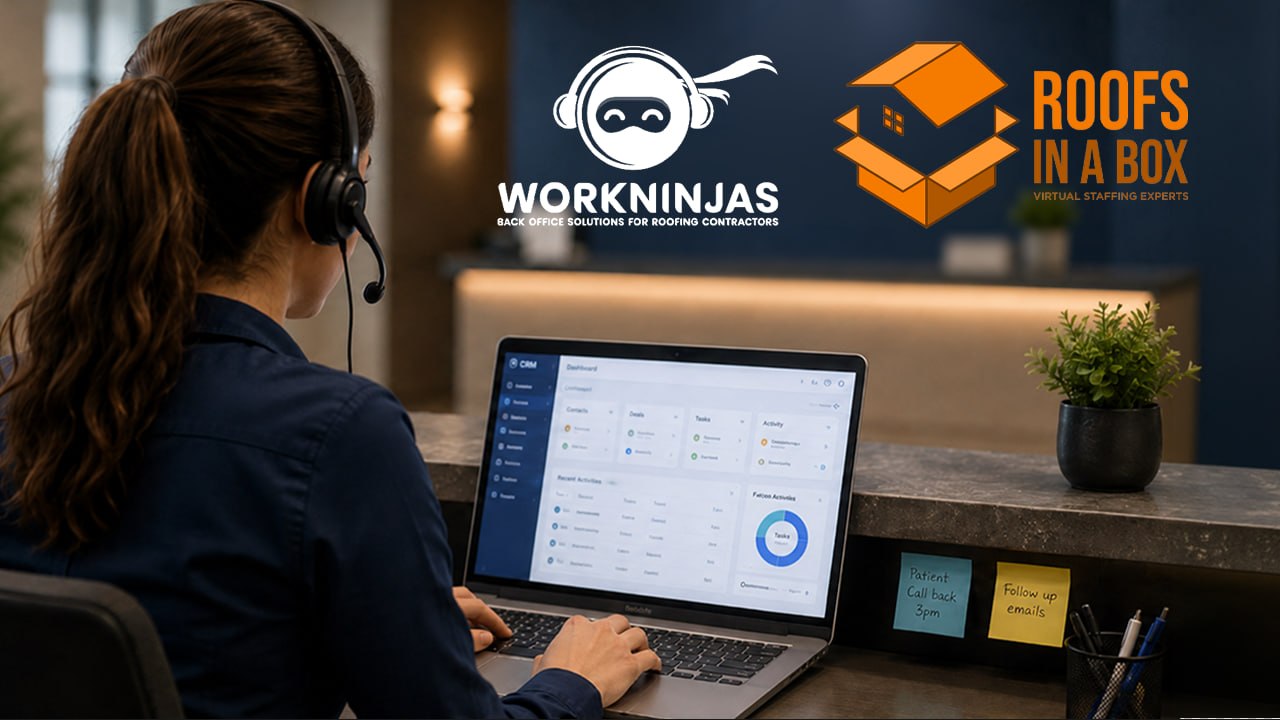
A good virtual assistant (VA) can answer calls, book appointments, follow up with leads, update the CRM, order measurements, help with supplements, check invoices, collect payments, send homeowner updates, and request reviews.
Ed Pain understands the benefits better than anyone. He hired multiple virtual employees at his own roofing company, and co-founded the staffing firm Roofs-In-A-Box to help other contractors implement the model.
Pain explained the VA trend simply: “The business owner is the best sales rep. They can’t get bogged down with operational stuff.” And the first place contractors feel the difference is in their lead pipeline.
Where most contractors still fall short
Speed-to-lead is critical in 2026. If a homeowner fills out a form or calls your company and nobody responds quickly, they may call the next roofer. But the follow-up is equally important.
“That’s where most contractors fall off the wagon,” according to Nicolas Fries.
Fries is the Marketing Director at Work Ninjas, another firm that offers virtual staffing services for roofers. He explained that when most contractors get leads, “they might get to them as quickly as possible, but they'll do one call, two calls, and that's it.”
Meanwhile, the homeowner could be at work or browsing contractors in between school pick-ups and errands. Consistent follow-up means busy clients don’t fall through the cracks, and marketing dollars aren’t wasted on half-nourished leads.
The white-glove treatment
Communication matters beyond the initial appointment, too. It’s a critical piece of customer service and earning those five-star reviews.
Homeowners expect consistent updates. They want timelines. They want to know when the crew is coming, when materials are arriving, when the supplement is submitted, and when the job is finished.
Arnold Atunez from Work Ninjas explained that homeowners today “like to feel pampered” and “want to have all the information at their hands.” He says the biggest complaints usually come down to “poor communication” and unanswered calls or messages.
The problem is, most contractors can’t justify full-time admin support until they have a substantial number of leads coming in each day. That’s where virtual staffing can fill the gaps, according to Ed Pain.
Roofs-In-A-Box will search and hire part-time employees for specific tasks, in addition to full-time roles. That can include lead nourishment, but also the more “mundane, back-end tasks” like warranty claims and insurance chasing, says Pain.
Protecting profit
Virtual assistants are not only useful for answering phones. They can also help protect the company’s money.
Linda is just one example. She helps check supplier invoices against quoted pricing from suppliers like ABC, SRS, and QXO for Work Ninjas roofing clients. She described finding invoice errors daily. In one case, Linda discovered $26,000-worth of errors for a client in a single month.
Ed Pain also pointed to bookkeeping and financial oversight as areas where many contractors are under-supported.
“You don’t really need a full-time CFO until you’re at $25 million a year,” says Pain, but almost every small business owner needs help with cash flow tracking and financial reporting.
Specialized virtual assistants can also help with Xactimate claims, insurance supplements, billing, collections, and CRM cleanup. All of those tasks affect cash flow.
The pros of virtual staff
The biggest benefit is leverage. A good virtual assistant gives the owner more time and helps the company stay organized.
These roles can go beyond admin support as well– helping to standardize operations. Ed Pain said one of the biggest advantages is that virtual staffing allows contractors to bring in “C-suite-type talent” without hiring a full-time executive.
For smaller companies, this can make the business look and feel more professional. For larger companies, it can help keep departments moving.
The cons of virtual staff
Virtual assistants are not a magic fix. While staffing agencies can hire for specific skillsets and even train employees on roofing industry basics in some cases, business owners still need to be accountable.
Clear communication, training on company-specific processes, and additional support during the onboarding period are essential, as with any new employee.
Ed Pain also pointed out that some roles are harder to manage virtually. For example, he would not recommend outsourcing a production manager or project manager role because “you need to show up to builds.” The same goes for high-dollar, commercial sales “hunter” roles.
How to find a virtual assistant
There are many virtual staffing companies, but roofing-specific support is becoming more important.
Work Ninjas is one example. They are specifically catered to contractors and support businesses across lead management, supplements, production, estimating, accounting, CRM work, collections, and customer communication.
The key is hiring someone for the specific work your company needs done, which means defining the role upfront.
Roofs In A Box is another example. Ed Pain emphasized the importance of training. For every new hire, Roofs-In-A-Box provides 2-3 days of basic training, including roofing terminology, insurance, gutters, windows, and siding. By the time someone is handed off to the contractor, “they understand the general construction terminology, what they’re doing, the scope of work, insurance, and then also the supplement type of work.”
TDLR
More roofers are switching to virtual assistants because the business has become too complex to manage alone.
Leads need fast follow-up. Homeowners expect better communication. Insurance work requires documentation. CRMs need to be updated. Invoices need to be checked. Payments need to be collected. A virtual assistant can help with all of that.
The key is to hire the right person, give them a clear process, and hold them accountable. Used the right way, virtual assistants can help roofing companies save time, improve customer experience, protect profit, and grow without adding unnecessary chaos.