



The last few weeks produced some of the biggest roofing stories of the year. On the Nov 14 Roofing Insights podcast, Sam Cook and I walked through about 10 of them, starting with Lee Haight's viral video and the backlash that followed, and ending with a $2 million Texas judgment and a roundup of criminal cases.
I am Dmitry Lipinskiy. I have hosted Roofing Insights since 2017. This recap is here so the episode is searchable on Google, with a timestamp into each story.
If you are a homeowner hiring a roofer, use Directorii to find a qualified contractor. Jobs can be backed by a $30,000 guarantee. If you are a contractor, get listed and register the job so your pay can be protected too.
Watch the full episode here:
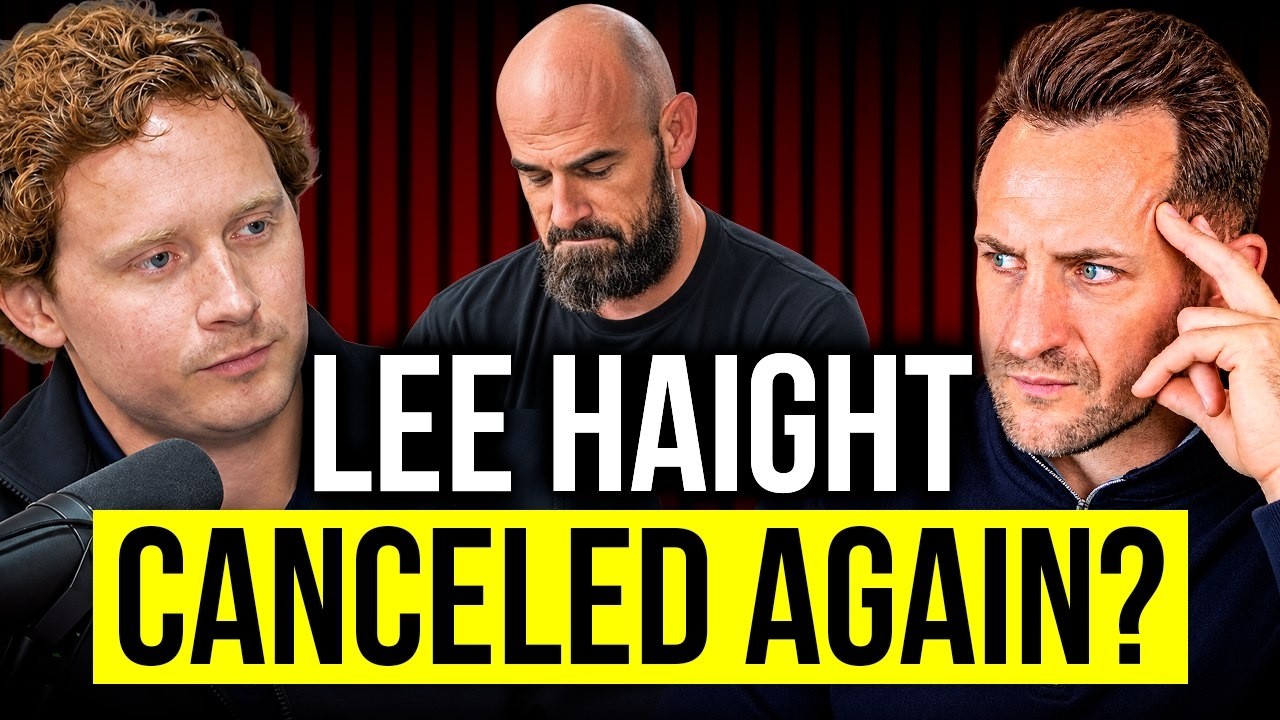
Lee Haight's viral video and the cancellation that followed
The lead story is Lee Haight's political video, which had gone out the day before we recorded, and the cancellation that followed. By cancellation, I mean the business kind: negative reviews, people blocking you, and a real chance of losing customers.
The warning is not new. I have said for years that a business channel should stay out of politics, because you will lose a large share of potential clients no matter which side you pick. People who disagree with you are usually louder than people who agree. Changing sides later can shrink the audience twice.
Haight still owes me $60,000. I said that on the episode, and I have said it publicly before. I do not wish him harm. I do think this is a useful lesson for other contractors: if you bring a charged political fight onto a business channel, expect the backlash.
This is not the first time Lee Haight has been in our coverage. For the earlier Southers Construction fallout and the $200,000 judgment a homeowner has been trying to collect, read Southers, Lee Haight Scandal: Homeowner Struggling to Collect $200K Judgment. For a longer look at his public claims, read Lee Haight: Scammer or Roofing Sales Pioneer?.
Owens Corning roofing sales fall 16%
Owens Corning's third-quarter 2026 roofing results were weak, which matches a quiet storm year. On the episode we said roofing sales fell 16%, from $1.24 billion a year earlier, and that the segment EBITDA margin dropped from 34% to 29%. We also cited a company net loss of $248 million.
Owens Corning's own third-quarter 2026 release confirms those figures: Roofing sales were $1.042 billion, down 16% from $1.240 billion, and the Roofing EBITDA margin fell from 34% to 29%. The company posted a net loss of $248 million.
Two quiet storm years in a row are a correction after a bloated stretch when almost anyone could get into roofing and make money. That does not mean the pain is finished. The harder question, which we asked on the show, is why a manufacturer raises prices when demand is falling.
IBHS puts a 15-year cap on FORTIFIED shingle roofs
This news started in September, and manufacturers began responding in October. For years, shingle warranties climbed from 30 years to 40, 50, and then lifetime. Then insurers started talking about roofs older than 15 years.
IBHS, the Insurance Institute for Business and Home Safety, issued a technical bulletin in September saying asphalt shingle roofs older than 15 years cannot qualify for FORTIFIED re-designations. Public documents match that: Technical Bulletin FH-2026-03, dated September 29, 2026, limits FORTIFIED re-designation eligibility for asphalt shingle roof systems to 15 years, for applications on or after January 1, 2027. It is not, by itself, a rule that every 15-year-old roof must be replaced.
On the episode, Sam argued this is good for roofers and hard on homeowners, because more people will get non-renewal pressure and call for a new roof. I asked why manufacturers are so angry about it if roofers should be celebrating. The honest tension is this: insurance wants newer roofs on the books, roofers get more replacements, and a homeowner with a well-built 18-year-old roof can get squeezed by age alone. ARMA has been asking carriers not to turn the bulletin into a blunt underwriting cutoff, and to account for modern shingle technology and installation quality.
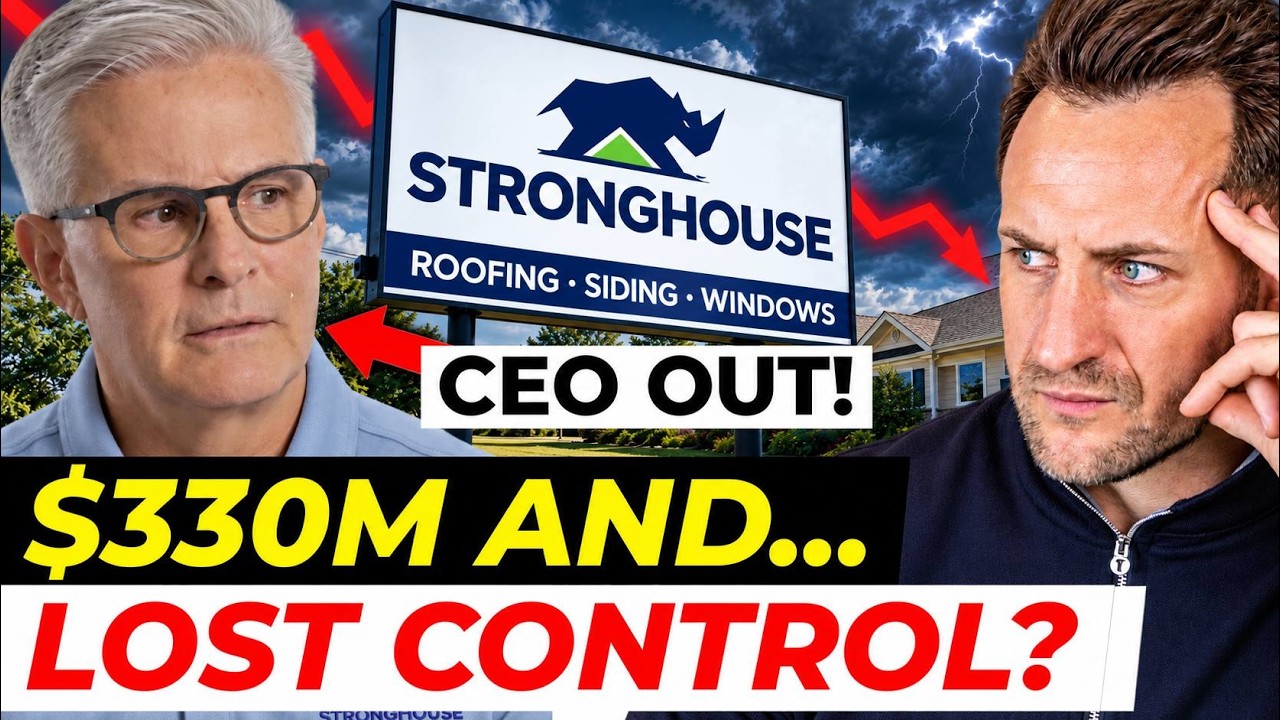
Stronghouse Solutions is turned over to its lenders
Homepros reported exclusively that O2 Investment Partners, the private equity sponsor behind Stronghouse Solutions, is turning control of the company over to its lender. Stronghouse is also searching for a new CEO.
This is what a two-year stretch with fewer storms can do to a roll-up that was built in better years. The company is still there. A move like this does not, by itself, mean it is closing. I recorded a separate video on this on Nov 4. For the full write-up, read Stronghouse: $330M in Roofing Sales, So Why Are Lenders Taking Over?.
One name from the episode still needs a caveat. We said a leader had just resigned a couple of days earlier. I could not independently confirm a mid-November 2026 resignation. Public records show Kirt Linington, whose name auto-captions rendered poorly, stepped down as CEO in December 2024 and was succeeded by Russ Reynolds. Treat that "couple of days ago" line as unverified until we have a primary source.
Mighty Dog Roofing's latest downturn
Mighty Dog came up again. On the episode we said the brand admitted leads are down 30% and is pivoting to 65% retail, that it had 71 locations at the end of 2025, and that at least 17 franchisees are suing the brand. Zach, the CEO, reached out about three weeks before the recording to tell his side after our earlier podcast with people suing the company, but his lawyers would not clear him to talk.
I have not independently confirmed the 30% lead drop, the 65% retail mix, the 71-location figure, or the "at least 17" lawsuit count. Franchisee lawsuits against Mighty Dog are real, and a federal court in 2026 allowed key fraud and contract claims to move forward, but those specific operating numbers should be treated as what was said on the show until there is a public filing or a company statement that matches them.
The larger point stands either way: a storm-dependent model is hard to franchise, because you are selling someone a business that can shrink fast when the weather goes quiet.
North Carolina court revives 41 roofer lawsuits
On November 4, 2026, the North Carolina Court of Appeals reinstated 41 breach of contract suits filed by Piedmont Roofing Services against a group of carriers, including State Farm. A trial judge had thrown the cases out. The appeals ruling was split, with one judge dissenting.
That matches the public decision. Coverage describes a split panel reviving contract claims, while tort claims stayed dismissed, and some reports refer to 42 insurer suits in the wider set. On the episode we used both 41 and 42. The safest way to state it is this: 41 suits were revived at the Court of Appeals.
The issue underneath is assignment of benefits. A roofer with a large book of unpaid claims can take the fight to the carrier in a way a single homeowner usually cannot. Insurers often answer that kind of pressure by pushing more work into direct-repair programs, where the contractor gets the leads and agrees to the carrier's pricing. That can be easier volume, and it can also be 20% less per job.
Tesla Solar Roof is discontinued, and a judge finds Tesla liable for fraud
Tesla quietly ended the Solar Roof. In August, certified installers were told the company would only supply conventional panels going forward. Then, on November 7, Electrek reported that a California judge had deemed Tesla liable for fraud and negligent misrepresentation in a Solar Roof case after Tesla repeatedly failed to turn over evidence.
Both pieces of that story check out. Electrek reported the Solar Roof tile discontinuation on August 20, 2026, and the California fraud finding on November 7, 2026. Damages in that case were still to be determined.
I have never met a roofer who wanted Tesla's Solar Roof as the core of the business. The ones I have visited used it as marketing. Elon Musk is good at announcing the future. When a product does not work, it is better to kill it than to keep selling it.
QXO reports 79% sales growth
On November 9, QXO put out preliminary third-quarter numbers: sales up 79% and adjusted EBITDA up 85% year over year, including the Kodiak Building Partners and TopBuild acquisitions. We said the stock jumped 9% to 14% pre-market, with full results due after the close on November 12. The same morning, Brad Jacobs's private equity platform announced a $1 billion investment in CKX Lands to build another acquisition vehicle.
QXO's public filings match the 79% sales growth and 85% adjusted EBITDA growth, and the $1 billion CKX Lands investment. QXO closed a hostile, $11 billion takeover of Beacon Roofing Supply in 2025, then bought Kodiak and TopBuild. On the episode I said Jacobs wants QXO at $50 billion in annual sales, which would be close to the whole market. Treat that $50 billion target as what we said on the show unless you are quoting a primary Jacobs remark.
He is buying while others are shrinking. A few years ago, a lot of private equity bought at the peak. This is the other side of that trade. The remaining national distribution names we mentioned are ABC and SRS.
Texas AG wins a $2 million judgment against Rubinsky Roofing
Texas Attorney General Ken Paxton won a judgment of more than $2 million against Rubinsky Roofing and its owner, Gilad Rubinsky, after homeowners organized themselves.
The official judgment holds the company liable for 27 violations of the Texas Deceptive Trade Practices Act, including 5 involving consumers age 65 or older. It calls for more than $1.5 million in civil penalties and at least $500,000 in consumer restitution, and it permanently bars the deceptive practices named in the suit. The AG announced the result on October 8, 2026, after filing the case in May.
About 40 homeowners formed a WhatsApp group, Rubinsky Legal Matters, and compiled losses totaling about $500,000. The Dallas Morning News investigated, then the AG's case followed. On the episode we also mentioned individual amounts, including one homeowner who paid $24,000 and another who handed over $10,000.
Rubinsky had been on Directorii. Some people criticized us for that. A contractor can qualify by passing a background check and having good reviews. We had two complaints, reviewed them, and removed the company before the wider wave of complaints landed. We cannot stand behind work they did before they joined, or after they were removed. We did not have a single claim from a job we connected while they were listed. If we had, that would have been our liability.
If you are a Texas homeowner still dealing with unfinished or unpaid roof work, start with a qualified contractor on Directorii. If you are a contractor who does the work and wants protection when a customer will not pay, register the job.
One number from the episode should not be repeated as fact. Auto-captions picked up a "$125 million" penalty figure tied to the older-consumer violations. That does not match the judgment. The court used $10,000 for each of the 27 violations, plus an additional $250,000 for each of the 5 violations involving consumers 65 or older, which is how the civil penalties reach about $1.52 million before restitution.
Criminal charges in four states, plus a $700,000 EEOC settlement
The last block was a legal roundup: criminal cases in Maine, Pennsylvania, Florida, and Maryland involving deposits taken for roofs that were never built, plus a $700,000 EEOC settlement.
Law360 reported on November 6, 2026, that Anthony Roofing Tecta America LLC agreed to pay $700,000 to settle an EEOC race and sex harassment lawsuit. The EEOC's own announcement matches that figure and date.
The four-state criminal cases line up with Roofing Contractor's legal roundup, and with the names we discussed on the show:
- Maine: Matthew Roy, owner of MJR Contracting and Roofing in Lewiston, reached a civil settlement with the Maine Attorney General's office requiring $114,250 in restitution and penalties, and he has also faced criminal charges. The settlement bars him from operating a contracting business in Maine for 10 years.
- Pennsylvania: Samuel Harris, owner of Harris Roofing in Bedford, was charged after allegations he accepted more than $270,000 toward a roof replacement at Saint Andrew Catholic Church in Johnstown and never started the work. Public docket reporting later said that case was withdrawn on September 30, 2026. We did not mention the withdrawal on the episode, so treat it as a later public-record update, not as something said on the show.
- Florida: The same published roundup, which we pointed to on the episode, includes Gary Jackson, doing business as Metal Roof Masters LLC, who was charged in Miami-Dade after a homeowner paid a $7,800 deposit on a $14,000 contract and no work was performed. He was booked on third-degree grand theft and contracting without a license. We spent less time on this case by name than on the others.
- Maryland: Alex J. Alexander of Bowie was charged after a Waldorf homeowner paid a $2,319 deposit on a $4,214 roof-repair contract, the work never started, and a refund was refused. Auto-captions turned his name into "Alexandre Bowie." The charges include unlicensed contracting and felony theft of $1,500 to less than $25,000.
- Also in Maryland, and discussed separately on the show: L.M. Roofing LLC in Middle River, operated by Louis John Milanovich, is charged in Calvert County after a $4,750 deposit on a June 9, 2026 roof replacement in Owings was taken and the work never started. Auto-captions said "Culver County." I also asked on the show how someone works on a government building with no license. I have not seen a primary source that describes this as a government job, so that detail is unverified. The published reporting describes a residential job in Owings.
Deposits taken and work never started is the pattern. It hurts homeowners, and it hurts every contractor who does the job the right way.
On the same episode, I also announced that Directorii now protects contractors as well as homeowners, up to $30,000, when the project is registered within 3 business days of signing. The fee we stated on the show is 1% of the project. If a homeowner does not pay within 30 days, Directorii can write the contractor a check, up to $30,000, and then pursue the homeowner.
Key takeaways
- Lee Haight's political video triggered a business backlash. A contractor channel that goes political should expect to lose customers, including through negative reviews.
- Owens Corning's third-quarter 2026 Roofing sales fell 16% to $1.042 billion, and the segment margin fell from 34% to 29%, in a weak storm market.
- IBHS limited FORTIFIED re-designation for asphalt shingle roofs older than 15 years, starting with applications on or after January 1, 2027. That is a designation rule, not an automatic order to tear off every 15-year-old roof.
- Stronghouse Solutions, a large roofing platform, is being handed from its private equity sponsor to its lenders. That is debt pressure in a slow storm cycle, not proof the company is closing.
- The North Carolina Court of Appeals on November 4, 2026, revived 41 contract suits by Piedmont Roofing Services against insurers.
- Tesla discontinued the Solar Roof in August 2026, and a California judge in November found Tesla liable for fraud and negligent misrepresentation in a Solar Roof case.
- QXO's preliminary third quarter showed sales up 79% and adjusted EBITDA up 85%, driven by acquisitions, while it keeps buying distribution.
- A Texas court entered a judgment of more than $2 million against Rubinsky Roofing, including roughly $1.52 million in civil penalties and at least $500,000 in restitution for consumers.
- Criminal cases in Maine, Pennsylvania, Florida, and Maryland, plus a $700,000 EEOC settlement at Anthony Roofing Tecta America, are another reminder that unpaid deposits and workplace claims keep landing on this industry.
FAQ
What is the latest Roofing Insights news podcast?
The Nov 14, 2026 episode, "Lee Haight's Viral Video - Did He Go Too Far?" It is a studio news show with Sam Cook, about 57 minutes long, covering roughly 10 recent industry stories. Watch it at https://youtu.be/ZkuthIrKZe0.
What happened with Lee Haight's viral video?
Haight posted a political video, and it triggered a wave of backlash that we described as cancellation in the business sense: negative reviews, people blocking him, and lost customers. The episode argues that mixing politics with a contractor brand is usually a losing bet. For earlier reporting on Haight, see our Southers and $200,000 judgment story and Lee Haight: Scammer or Roofing Sales Pioneer?.
How large was the Texas judgment against Rubinsky Roofing?
More than $2 million, according to the Texas Attorney General. The judgment found 27 Deceptive Trade Practices Act violations, including 5 involving consumers 65 or older, and it includes more than $1.5 million in civil penalties plus at least $500,000 in consumer restitution. It also bars the deceptive practices named in the case.
Did Directorii list Rubinsky Roofing?
Yes, and we removed the company after two complaints, before the wider public case landed. On the episode I said we did not have a claim from a job we connected while they were listed.
Is Stronghouse going out of business?
Not based on the available reporting. Control is being transferred to lenders, and the company is looking for a new CEO. That is not the same thing as a shutdown. Read the full Stronghouse article, or watch the Nov 4 video, Stronghouse: $330M in Roofing Sales, So Why Are Lenders Taking Over?.
What did IBHS change about FORTIFIED shingle roofs?
A September 2026 technical bulletin says asphalt shingle roofs older than 15 years cannot qualify for FORTIFIED re-designation, for applications on or after January 1, 2027. It does not, by itself, require every homeowner to replace a 15-year-old roof.
Unverified or corrected items
- "Kirt Linington resigned a couple of days ago": said on the episode, not independently confirmed as a November 2026 resignation. He left the CEO role in December 2024.
- Mighty Dog leads down 30%, a pivot to 65% retail, 71 locations at the end of 2025, and "at least 17" franchisees suing: said on the episode, not independently confirmed.
- Jacobs's $50 billion annual sales target for QXO: said on the episode, not independently confirmed from a primary quote in this draft.
- Auto-caption error: a "$125 million" Texas penalty figure. The judgment's civil penalties are about $1.52 million, plus restitution.
- Auto-caption error: "Alexandre Bowie" is Alex J. Alexander of Bowie, Maryland.
- Auto-caption error: "Culver County" is Calvert County, Maryland.
- The Middle River Maryland case as a "government building" job: asked on the show, not confirmed in the published reporting, which describes a residential job in Owings.
- The Pennsylvania Harris Roofing case was later reported as withdrawn on September 30, 2026. That update was not part of the episode.